
Resources
ABA
Applied Behavior Analysis; ABA is a type of therapy for people with autism that seeks to understand and eliminate challenging behaviors through conditioning and repetition.
Autism
A lifelong disorder characterized by impairments in both communication and social interaction
Autism Spectrum Disorder
An umbrella term coined by the DSM-5 to refer to all autism-like diagnoses:
Diagnostic Criteria for 299.00 Autism Spectrum Disorder
To meet diagnostic criteria for ASD according to DSM-5, a child must have persistent deficits in each of three areas of social communication and interaction (see A.1. through A.3. below) plus at least two of four types of restricted, repetitive behaviors (see B.1. through B.4. below).
Note: Individuals with a well-established DSM-IV diagnosis of autistic disorder, Asperger’s disorder, or pervasive developmental disorder not otherwise specified should be given the diagnosis of autism spectrum disorder. Individuals who have marked deficits in social communication, but whose symptoms do not otherwise meet criteria for autism spectrum disorder, should be evaluated for social (pragmatic) communication disorder.
References
American Psychiatric Association. Diagnostic and statistical manual of mental disorders. 5th ed. Arlington, VA: American Psychiatric Association; 2013.
Augmentative and Alternative Communication (AAC)
Augmentative and alternative communication device; usually shows pictures or common phrases that a disabled person can point to, and the device will speak those words aloud
Anticipatory Grief
Originally defined as the grief that is experienced when one expects a death—for example when an individual develops a life-limiting illness. Anticipatory grief can be experienced by patients, families, and medical personnel. It was originally hypothesized that persons who experienced grief prior to the death would have better outcomes—a hypothesis that was not supported by research. Since those initial efforts, anticipatory grief has been redefined by Dr. T. A. Rando as a response to many tangible and intangible losses encountered in an illness.
Anxiety
Feelings of unease and worry. This can be directed at one specific event or item, or more generalized (“free-floating” anxiety). While anxiety is a psychological state, it also triggers physical symptoms, such as upset stomach, rapid heart rate, feelings of tightness in the chest, or fidgeting. In a person with autism, anxiety can also manifest in an increase in stimming, changes in eating and sleeping, and regressive behaviors.
Asperger’s Syndrome
A milder form of autism; people with Asperger’s frequently have less verbal impairment, while maintaining difficulty in social development and skills; still used by many within the autism community, though it is no longer recognized as a separate disorder.
Autonomy
From the Greek – literally defined as “self-law.” As an ethical principle, autonomy means that individuals should determine their own choices for care and make decisions about their preferences, choices, and behaviors. It is based upon informed consent – that is that individuals have the information they need to make such decisions on their own.
Behaviorist
A disability professional who uses data to understand challenging behaviors, what causes them, and how to solve them.
Bereavement
An objective state of loss. A widow is a bereaved spouse.
Classic Autism
A sub-type of autism that usually refers to a person more profoundly affected by the diagnosis; this can mean less or no ability to communicate verbally, the need for a caregiver, and limited or no ability to socialize in traditional ways; this term is still commonly used within the autism community, though no longer a separate DSM diagnosis.
Coping
techniques utilized to manage challenges and stressful conditions of an individual’s life and environment. Coping strategies can vary and include, among others emotion-based and problem-solving strategies. These strategies can be adaptive –helping persons deal with these challenges or maladaptive –where they inhibit adaptation.
Deep pressure
Can be administered through a weighted blanket or vest, or through therapeutic massage; helps to counteract sensory overload by stimulating endorphin production.
Disenfranchised grief
A loss that is not openly acknowledged, socially sanctioned, or publicly mourned. The individual has a loss but “no right to grieve.”
DSM
The Diagnostic and Statistical Manual of the American Psychiatric Association; the reference book for professionals to make an autism diagnosis; the medical community is currently using the 5th edition (often referred to as the DSM-5).
Elopement
Leaving a safe space; the reasons for elopement can range from distractedly following an item of interest, to avoidance of a task, to a fear response when faced with trauma.
Eye contact
Looking directly into a person’s eyes when speaking with them; avoidance of eye contact is a hallmark of people with autism.
Facilitated Communication
An alternative kind of communication where the disabled person is physically assisted to point to or type their communication.
Fidget toy
A small manipulative that helps to focus anxious energy.
“First, then”
A way to help concretely understand cause and effect; for example, “First we sit at the table. Then we eat our dinner.”
Grief
The subjective response to that state of loss. Manifestations of grief can include physical, emotional, cognitive, behavioral, and spiritual reactions. Persons, depending on a number of factors including relationship and type of death, may experience grief reactions for an indeterminate period of time. We may mourn not only death-related losses but non-death losses such as divorce or losses of possessions. Generally, with most individuals, over time, reactions become less intense, occur less often, and do not last as long. Behaviors or thoughts that are destructive toward others or self, as well as a sustained inability to function in key social roles will be defined as complicated grief.
Hospice Care
Hospice care is medical care to help someone with a terminal illness live as well as possible for as long as possible, increasing quality of life. It addresses symptom management, coordination of care, communication and decision making, clarification of goals of care, and quality of life. Hospice care includes an interdisciplinary team of professionals who address physical, psychosocial, and spiritual distress focused on both the dying person and their entire family.
IDD
Intellectual and developmental disability; can refer to any disorder with similar qualities from autism to Down Syndrome.
Loss Inventories
Refers to a variety of assessment tools that review the history of losses an individual experienced.
Meltdown
A state of being overwhelmed, which can include crying, vocalizing, eloping from safe spaces, physical demonstrations of anger, and psychological fragility; this is not simply a tantrum, but is a reaction to feeling out of control.
Mourning
Generally defined in two ways:
1) outward displays of loss defined by a given culture. Wearing black and attending funerals are two common ways of mourning in American culture.
2) less often defined as the intra-psychic ways that individuals cope with grief—more generally called grieving or grief work.
Movement break
A strategy for helping a person with autism in stressful situations; literally, it means getting up and moving before coming back to the difficult task.
Non-verbal
Can either refer to communication that doesn’t use words, or a person with autism who does not speak.
Paraprofessional
A paid caretaker for a person with disabilities; can also be called a para, DCP (direct care provider), or aide.
Palliative Care
Palliative care aims to control pain and manage symptoms.
PBS
Positive Behavior Supports; PBS recognize that challenging behaviors serve a purpose and seeks to use those behaviors as communication of needs. By understanding the reason behind challenging behaviors, needs can be understood, and modifications can be put in place to better meet the needs of the person with autism, thereby eliminating the challenging behavior.
PDD/NOS
Pervasive Developmental Disorder, not otherwise specified; the catch-all category clinicians previously used when they suspected a patient had autism, but not all of the clinical criteria matched; this diagnosis was eliminated in the current edition of the DSM.
PECS
Picture Exchange Communication System; a form of AAC that uses a small binder of pictures or an iPad; the disabled person points to those pictures in lieu of verbal communication.
Peer modeling
Using people of the same age to demonstrate behaviors or skills.
Regression (Age)
A common defense mechanism, sometimes experienced in grief, where an individual reverts to behaviors or state of mind of a younger age.
Repetition
Repetitive movements or activities; can demonstrate a range of emotions for the person with autism; repetition is also needed for greater understanding of new ideas.
Self-advocate
A disabled person who communicates their needs on their own behalf.
Self-injury
When a person in psychological distress injures themselves; frequently a reaction to sensory overload or trauma.
Sensory bin
A small box that contains a gentle sensory stimulus like dried rice or beans; by immersing a person’s hands in the bin, it helps them to focus and center themselves.
Sensory overload
When a person has too much sensory input and it causes them to feel overwhelmed, anxious, or angry.
Sensory sensitivity
The condition of experiencing the senses more acutely than others; a person who is sensory sensitive may experience temperature in a room, the texture of food, ambient smells, or tags on clothing in such a way that it is overwhelming or distracting.
Social Story
A behavioral tool that helps people with autism learn new skills or manage life events; a social story breaks down a larger skill or task into small pieces and provides validation for the change.
Stimming
An outward expression of the need for stimulus; examples include bouncing, rocking back and forth, and hand flapping; stimming is not necessarily tied to happy or sad emotions, and can often be a coping mechanism.
Trauma
Events that an individual experiences as highly stressful. Scholars who study death and/or trauma generally emphasize trauma as an event that challenges a person’s assumptive world that is that the world is safe, benevolent, and predictable.
Verbal
The ability to communicate using spoken? words.
Visual schedule
A list using pictures that show the order of events; an excellent tool for understanding what will come next, which is a frequent anxiety trigger.
Vocalization
Sounds that are not words; examples include laughter, screeches, tongue clicks, or humming.
Weighted blanket/vest
A device that provides weight and deep pressure for a person experiencing sensory overload; this deep pressure has a calming effect.
Download, print, or share fact sheets that contain information and resources from the website’s portals.
-
 Fact Sheet Uno
Lorem ipsum dolor sit amet, consectetur adipiscing elit. Morbi quis luctus ex. Praesent dignissim volutpat felis, sit amet fringilla mi. Vestibulum id augue porttitor, aliquet arcu sed, condimentum arcu. Lorem ipsum dolor sit amet, consectetur adipiscing elit. Sed ut mauris a nisi fermentum sagittis sed at lacus.
-
Fact Sheet #2
Suspendisse mattis, odio at elementum varius, massa dolor aliquam ligula, vel fermentum leo purus in ipsum. Pellentesque molestie vulputate urna et sollicitudin.
-
What is Grief
Grief is a reaction to the loss of someone or something we have a bond with. It affects
us all, whether we’re on the autism spectrum or not.



Download the completed stories or customize them to fit the individualized needs or your autistic loved one.
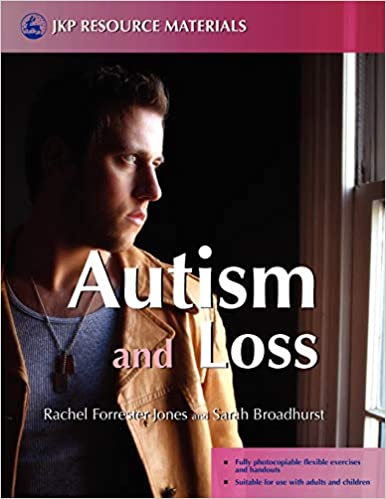
Autism and Loss by Rachel Forrester
Comprehensive book done by Rachel Forrester-Jones, a researcher in the UK who has done a lot of work on grief and loss with people with intellectual and developmental disabilities. Written for people providing supports for a variety of losses to people with ASD, including death of family, friends or staff, loss of friends and staff, loss of homes, pets, health, and more. It is relatively expensive, so check with libraries.
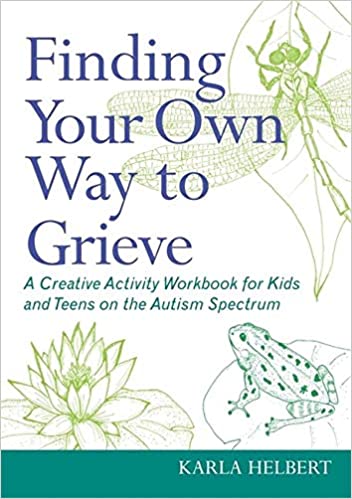
Finding Your Own Way to Grieve: A Creative Activity Workbook for Kids and Teens on the Autism Spectrum by Karla Helbert
We include this book in this list because one of the articles by autistic adults above mentions its usefulness, and because it is useful for teens on their way to adulthood. From its Amazon summary: Children and teenagers with autism can struggle to cope with the loss of a loved one, and the complicated and painful emotions of bereavement. This book explains death in concrete terms that the child with autism will understand, explores feelings that the child may encounter as a part of bereavement, and offers creative and expressive activities that facilitate healing. Can be used by an individual or with a support person. Mentioned in a number of the other resources as being a helpful activity workbook.
.
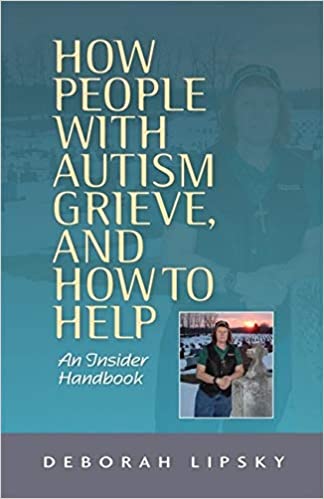
How People with Autism Grieve, and How to Help: An Insider Handbook by Deborah Lipsky
Deborah Lipsky is a writer whose autism was diagnosed at age 44 (https://clarionherald.org/news/a-nun-who-listened-and-believed-changed-her-life). Amazon notes: Through the description of personal experience, and case studies, the book explores how people with autism feel and express the loss of a loved one, how they process and come to terms with their feelings of grief, and offers practical and detailed advice to parents and carers on a range of sensitive issues. Mentioned as a helpful resource in a number of the other resources on this site.
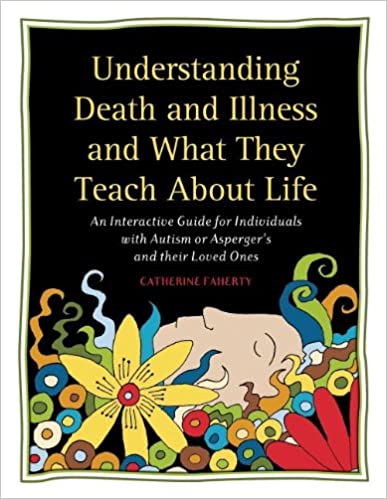
Understanding Death and Illness and What They Teach About Life: An Interactive Guide for Individuals with Autism of Asperger’s and their Loved Ones by Catherine Faherty
Catherine Faherty is an author, trainer, consultant and devoted ally to autistic self-advocates. She worked for years with people with autism and families at the University of North Carolina TEACCH Program. For more information, visit her website at http://www.catherinefaherty.com.
Autistic Grief Is Not Like Neurotypical Grief
Karla Fisher discovered she had ASD through dealing with a therapist on grieving. She began to understand her grief as a sensory processing problem, and recommends strategies for both caregivers and adults with autism including being careful with asking how someone “feels” but rather explore first how that person understands relationships.
Bereavement and Autism: A Universal Experience with Unique Challenges
Elizabeth Graham is an autism professional and woman with Asperger’s Syndrome. She is an Autism Waiver Service Coordinator at The Arc of Prince George’s County, based in Largo, Maryland. This 2014 article was written out of her experience and her ongoing research into grief, bereavement and autism. A key point she makes is that levels of grief may vary in relationship to the intensity of the relationship with the person whose loss they are grieving.
Coping with Grief as an Autistic Adult
Anita Lasko writes about the experience of losing her mother, with whom she had lived for 54 years and the ways the lessons her Mom had taught her helped with her bereavement.
Crisis Supports for the Autism Community
Lisa Morgan provides this short guide assists crisis workers in identifying and supporting autistic callers/texters who are in crisis, even in cases where a person with autism may not disclose (or be aware of) their diagnosis. It explains the unique differences in communication, thought processes, sensory issues and misunderstandings a crisis worker may encounter while assisting a person on the autism spectrum in crisis. Helpful for people supporting people with autism in person as well.
Amanda Madru eloquently talks about her grief following the sudden death of her grandmother.
A clear yet detailed short description of autism, with a helpful list of possible symptoms that, when considered in the light of dealing with grief and loss, could easily increase those autistic behaviors.
A short summary that highlights four reasons why a death may be particularly hard for a person on the autism spectrum.
Helping Your Loved One With Autism Cope With Feelings of Loss
A short article with three concrete coping activities suggested, and also a video that can help friends and others understand a “meltdown.”
Navigating Grief When Your Loved One Has Autism Spectrum Disorder
Very practical suggestions for dealing with an unexpected death and how to tell someone about the death.(e.g., Don’t hide it.) Focused on parents of children but adaptable to adults as well.
A helpful introduction to a toolkit developed by TEL (Talking End of Life). TEL is an online resource funded by the Australian Government Department of Health under the Public Health and Chronic Disease Grant Program that shows you how to teach people with intellectual disability about end of life.
Ways to Help Adults with Autism Cope with Death & Bereavement
Five brief suggestions for talking with autistic adults about death.
ARTICLES ABOUT AUTISM, GRIEF, AND LOSS
7 Ways to Help a Child with Autism Deal with Death
As the title says, seven short descriptions of ways to help autistic children. Also adaptable to dealing with adults.
Ask Dr. Emily – Grief and Bereavement
Suggestions from two clinical psychologists for families with autistic children, as well as links to other articles and a link to a site talking about how kids at different developmental levels experience and express grief.
Autism and eight tips for discussing a death in the family
Eight helpful suggestions, including “let your child say goodbye,” “use rituals,” and “help them regain a sense of control.”
Bereaved Individuals with Autism
Strategies and interventions highlighting the need for preparation and repetition.
Bereavement – a guide for parents and carers
A short, bulleted suggestions article from the Autism Society in the UK.
Can I Tell You About Autism?: A Guide for Friends, Family and Professionals
A fictional story by Tom, a young boy with autism, telling readers what it means. 60+ pages.
Grief and Loss: Helping Children with Autism Cope
Short article by a special education teacher.
Grief and Loss: Supportive Stories for Children with Autism
A Phd thesis by a student at Brigham Young on the use of stories to help autistic children with grief and loss.
Helping Autistic Children Understand Death and Dying
An excellent article summarizing responses to a survey of autistic adults asking their advice on helping autistic children understand death and dying.
How to Talk With Children With Autism About Death and Grief
Helpful strategies and suggestions from a mother whose husband died suddenly. Directed towards dealing with children but each of the strategies is easily adaptable in supporting adults.
Thirteen briefly described strategies for parents to help their children.
Supporting a Child with Autism in Their Grief
Six suggestions, preceded by an important reminder that “we need to teaseout what is autism from what is actually grief. Social withdrawal, distractibility, fear of separation from others, anger, and anxiety, and an increase in challenging behaviors can all simply be behaviors associated with autism.”
Supporting Grieving Children with Autism Spectrum Disorder
Short article with multiple suggestions and links for visual tools to help explain grief and bereavement, including a sample visual “contingency plan” in case someone wants to leave a funeral or wake.
Supporting Students with Autism Spectrum Disorder Through Grief and Loss
A longer article from the journal, Teaching Exceptional Children, helpfully organized around a case story of how a school team responded to the unexpected death of a favorite special education teacher, and the multitude of ways they supported the students and their families.
Talking to your child about tragedy: Six tips for the autism community
Short article with six suggestions from a school psychologist on helping children with autism deal with a tragic event in their community or on the news.
ARTICLES ABOUT PET DEATH
Two short printable PDF’s, one about the death of a dog, the other a cat.
Liz Becker writes a wonderful short article about her son Matt, the death of two cats and his grandmother, and Matt’s older brother and role model, Christopher.
Helping children grieve loss of pet
A request to a website for suggestions on helping children grieve the loss of a pet leads to multiple responses and stories by parents. Not specific to autistic children, but many of the strategies are the same.
Parents with Nonverbal Child Seek Advice on Preparing for Pet’s Death
Suggestions for a family to help a seven year old girl to deal with the impending death of their pet cat.
CHILDREN’S BOOKS
The Dead Bird by Margaret Wise Brown
A book about children who find a dead bird in the park, and what they do, by the same author who wrote Goodnight Moon and The Runaway Bunny.
Finding Your Own Way to Grieve Workbook Edition by Karla Helbert
From its Amazon summary: Children and teenagers with autism can struggle to cope with the loss of a loved one, and the complicated and painful emotions of bereavement. This book explains death in concrete terms that the child with autism will understand, explores feelings that the child may encounter as a part of bereavement, and offers creative and expressive activities that facilitate healing. Can be used by an individual or with a support person.
Get Rid of the Hurt: A Reproducible Workbook for Kids Experiencing Loss by Madeleine Brehm and Rachel Wenzlaff
Read the stories, or reproduce parts or all of the story to create a personal book.
I Have a Question about Death by Arlen Grad Gaines
Designed for children who learn best through visual cues and stories, and for parents to read and work with their kids.
I Have a Question about Cancer by Arlen Grad Gaines
In the same series as above, This book is designed to help kids, including children with autism spectrum disorder or other additional needs, to understand what it means when someone in their life has cancer.
I Have a Question about Divorce by Arlen Grad Gaines
A third book in the “I Have a Question” series, designed so a children can look and read as often as desired, or for a child and parent to discuss together.
It’s Ok to Feel This Way: Validating a Child’s Swirl of Emotions Amid Trauma by Susan M. Funk
A Healing Art coloring book that deals exclusively with children’s swirl of emotions through trauma. While children may recognize themselves through some of the drawings, adults will also have a tool for reaching out to a troubled child. This book is a vehicle for discussion, for children to see that life happens without it being their fault.
Sad Isn’t Bad: A Good-Grief Guidebook for Kids Dealing With Loss by Michaelene Mundy
Sad Isn’t Bad offers children of all ages a comforting, realistic look at loss–loaded with positive, life-affirming helps for coping with loss as a child. It’s a book that promotes honest and healthy grief–and growth.